
Data Center Migration Without the Disaster: Why Expert Consulting is the Safety Net You Need
![[FEATURED IMAGE] Data Center Migration Without the Disaster: Why Expert Consulting is the Safety Net You Need](https://cdn.marblism.com/1snJ5jE16dy.webp)
Data center migrations are high-stakes operations where a single misstep can cost hundreds of thousands of dollars in downtime, lost productivity, and damaged reputation. Yet many organizations approach these complex transitions with the same internal team that handles routine IT operations: expecting different results from the same resources.
The reality? Data center migration isn't just a technical challenge. It's a people challenge wrapped in technical complexity.
At Lurdez Consulting Group, we've seen companies lose sleep over migrations that could have been smooth, strategic transitions. The difference between a disaster and a success story often comes down to one factor: expert guidance that addresses both the human and technical elements of the move.
The Hidden Complexity of Data Center Migration
When business leaders think about data center migration, they often focus on the obvious: moving servers, reconfiguring networks, and ensuring applications run in the new environment. But the actual scope extends far beyond hardware relocation.
A successful migration requires orchestrating multiple interconnected domains:
- Asset discovery and comprehensive inventory that accounts for every dependency
- Detailed planning that aligns technical execution with business continuity requirements
- Infrastructure setup that considers future scalability and compliance needs
- Rigorous testing protocols that validate functionality under real-world conditions
- Careful execution that minimizes downtime during the transition
- Post-migration optimization that addresses performance issues before they impact users
Each of these phases presents potential failure points. Configuration drift: assuming old settings will work in new environments: can cause application failures. Neglecting post-migration monitoring means problems only surface when systems are under production load. Ignoring compliance requirements that differ by location can create legal and regulatory headaches.

The technical complexity alone justifies expert involvement. But the human element: the coordination, communication, and change management required: is where many migrations truly falter.
Why Internal Teams Struggle With Migration Projects
Your internal IT team is excellent at what they do. They keep systems running, troubleshoot issues, and maintain day-to-day operations. But data center migration is a fundamentally different challenge that requires specialized expertise most organizations don't maintain in-house.
Here's why internal teams often struggle:
Lack of migration-specific experience. Most IT professionals might encounter one or two major migrations in their entire career. Expert consultants have guided dozens of these transitions, encountering: and solving: problems your team hasn't seen yet.
Conflicting priorities. Your IT team still has to keep current operations running while planning and executing the migration. This divided attention creates blind spots and increases the risk of mistakes during the most critical phases.
Limited perspective on methodology selection. Should you use lift-and-shift, phased migration, or swing migration? Each approach has trade-offs that become apparent only with experience across different environments, business models, and technical architectures.
Insufficient stakeholder management. Migrations affect every department. Expert consultants bring proven frameworks for communicating with executives, department heads, and end users: ensuring everyone understands timelines, impacts, and their role in the transition.
The Relational Excellence Advantage in Migration Projects
At Lurdez Consulting Group, we approach data center migration through the lens of Relational Excellence: the understanding that technical success depends on human collaboration, clear communication, and strategic alignment.
This isn't just about being "good with people." It's about recognizing that migration projects fail when:
- Technical teams and business leaders speak different languages
- End users aren't prepared for changes in workflows or system access
- Dependencies aren't fully mapped because the right people weren't consulted
- Rollback procedures aren't clearly communicated, creating panic during inevitable hiccups
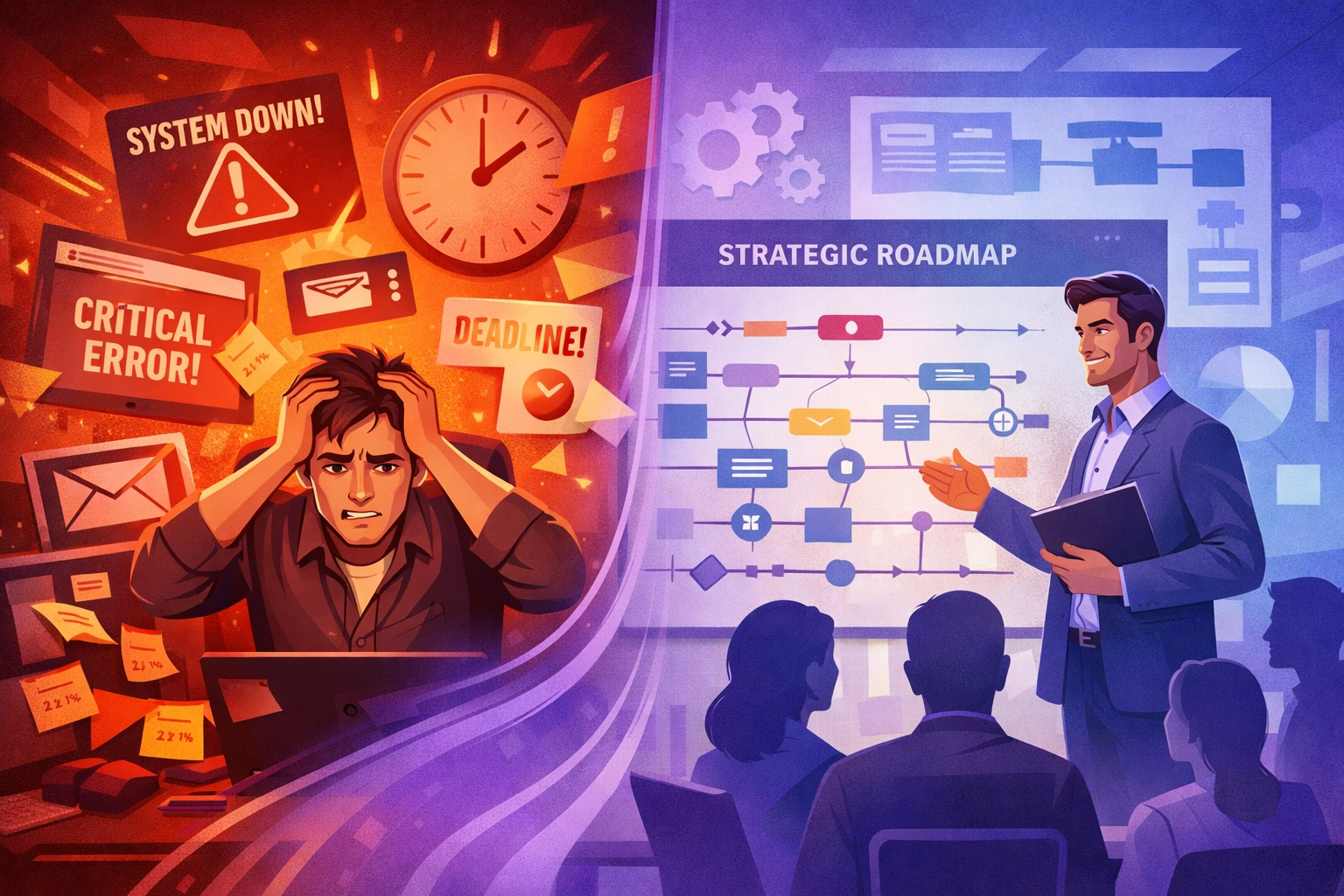
Our custom approach addresses these challenges by integrating technical expertise with proven project management frameworks that prioritize people alongside infrastructure.
We start by establishing clear communication channels that connect technical teams with business stakeholders. This ensures everyone understands not just what is happening, but why it matters to their specific role and responsibilities.
We map dependencies through collaborative discovery sessions that bring together teams who rarely interact: uncovering hidden connections between systems, workflows, and business processes that could derail the migration if overlooked.
We develop contingency plans that account for human factors: not just technical failures, but also scenarios like key personnel being unavailable, stakeholders needing additional training, or end users requiring extra support during the transition period.
The Technical Rigor You Need (Without the Tunnel Vision)
Expert consulting doesn't mean sacrificing technical excellence for soft skills. It means applying rigorous technical standards while maintaining strategic perspective on business objectives.
Our migration methodology includes:
Comprehensive risk assessment that evaluates both technical and operational vulnerabilities. We identify single points of failure in your current architecture and design migration strategies that eliminate these risks rather than reproduce them in the new environment.
Detailed validation protocols that test not just whether systems work, but whether they perform under production conditions. We've seen too many migrations where applications "worked" in testing but failed when real user loads hit the new infrastructure.
Compliance verification tailored to your industry and geographic requirements. Regulatory frameworks often differ between data center locations, and non-compliance discovered post-migration can force costly remediation or even rollback.
Disaster recovery validation that ensures your backup and recovery mechanisms function in the new environment. Migration is the worst possible time to discover your DR plan doesn't work as expected.

We establish rollback procedures before migration begins: not as a pessimistic contingency, but as a professional safety net that allows bold execution because everyone knows recovery is possible if needed.
The Cost of Getting It Wrong
The financial impact of a failed or problematic migration extends far beyond the obvious downtime costs.
Consider the cascading effects:
- Lost productivity across the organization while systems are unavailable
- Damaged customer relationships when services are interrupted
- Emergency consulting fees (at premium rates) to fix problems mid-crisis
- Extended timeline that keeps your team in firefighting mode for weeks or months
- Reputation damage with clients, partners, and investors who expect operational excellence
- Opportunity cost: every hour spent fixing migration problems is an hour not spent on strategic initiatives
Organizations that try to save money by handling migrations internally often end up spending more when problems arise. Expert consulting is an investment that protects against these downstream costs.
What Custom Approach Really Means
"Custom approach" has become consulting industry jargon. At Lurdez Consulting Group, it means something specific: we don't impose a one-size-fits-all methodology that worked for someone else.
We start by understanding your unique situation:
- What business outcomes does this migration need to achieve?
- What constraints: budget, timeline, regulatory: shape the project boundaries?
- What internal capabilities exist, and where do you need external expertise?
- What keeps your leadership up at night regarding this transition?
From there, we design a migration strategy that balances your technical requirements with your organizational reality. This might mean a phased approach that minimizes business disruption even if it extends the timeline. Or it might mean an aggressive execution schedule that capitalizes on a planned shutdown period.
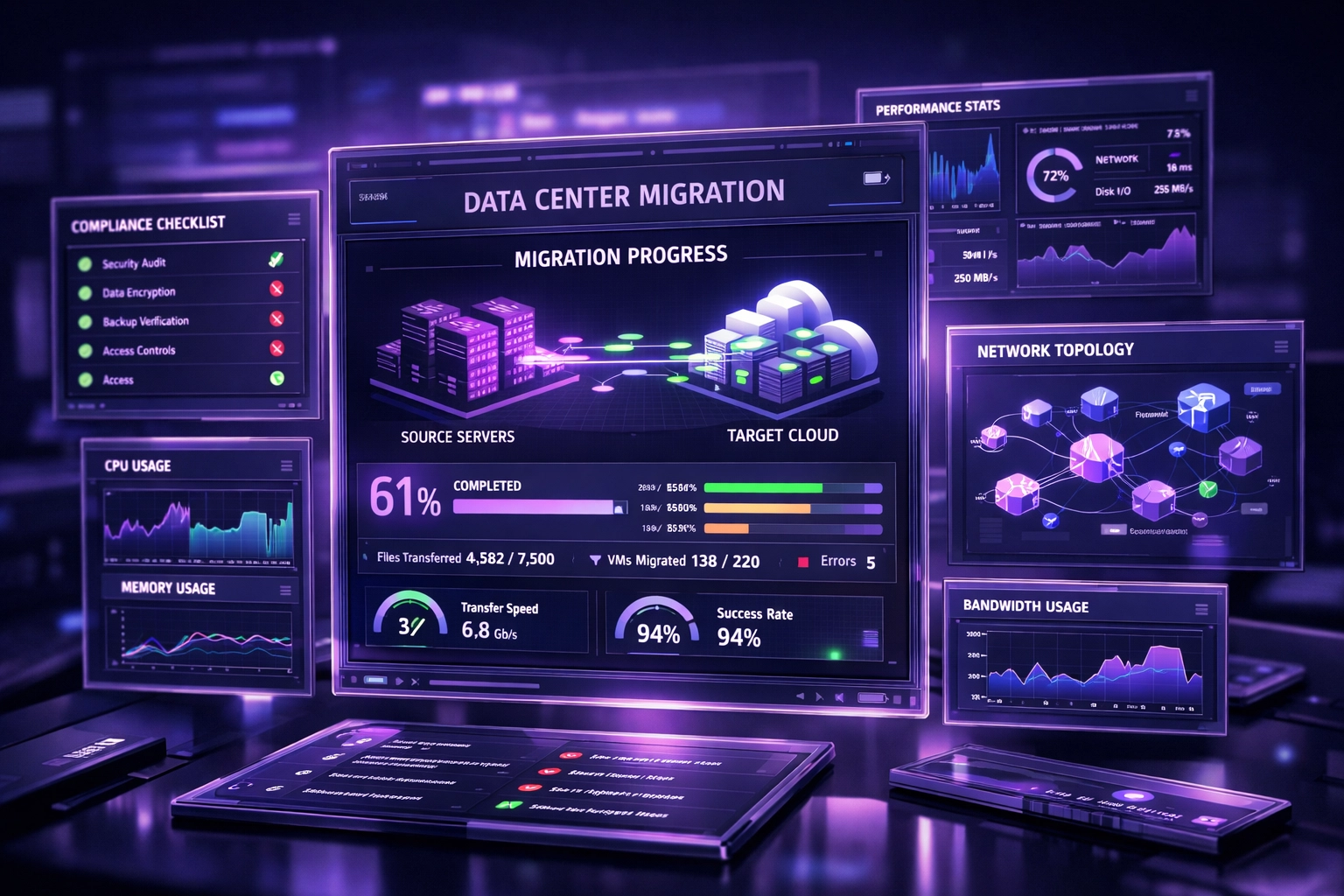
We adapt our communication style, documentation level, and stakeholder involvement based on your culture and preferences: not our template. The goal is seamless integration with your team, not a consultant-client divide that creates information silos.
The Human Element: Training, Support, and Change Management
Technical migration is only half the battle. Your employees need to adapt to new systems, new workflows, and potentially new ways of accessing the tools they use every day.
Expert consultants bring structured change management that prepares your workforce for transition:
- Pre-migration communication that sets expectations and reduces anxiety
- Role-specific training that focuses on the changes relevant to each team
- Support structures that provide immediate help during the critical transition period
- Post-migration follow-up that addresses issues as users encounter them in real-world scenarios
This human-centered approach prevents the "technical success, operational failure" scenario where systems work perfectly but adoption suffers because people weren't prepared for change.
When to Bring in Expert Help
Not every data center migration requires external consulting. Small, straightforward moves with minimal dependencies might be well within your internal team's capabilities.
But consider expert consulting when:
- The migration affects mission-critical systems with zero-downtime requirements
- Your organization has never executed a migration of this scale
- Multiple stakeholders have competing priorities or concerns
- Compliance requirements are complex or unfamiliar to your team
- Your internal team is already stretched managing daily operations
- The consequences of failure would be severe for the business
Expert consultants aren't there to replace your team. We're there to augment their capabilities, share hard-won knowledge, and serve as the safety net that allows confident execution of a high-stakes project.
Moving Forward With Confidence
Data center migration doesn't have to be the nightmare scenario that keeps executives up at night. With the right expertise guiding both the technical execution and human elements, it can be a smooth transition that positions your organization for future growth.
At Lurdez Consulting Group, we've built our reputation on delivering migrations that meet technical standards while honoring the reality that organizations are made of people, not just infrastructure.
If you're planning a data center migration and want to discuss how expert consulting can protect your investment and ensure success, let's talk. We'll assess your specific situation and recommend an approach that fits your needs( not a pre-packaged solution that ignores your unique challenges.)