
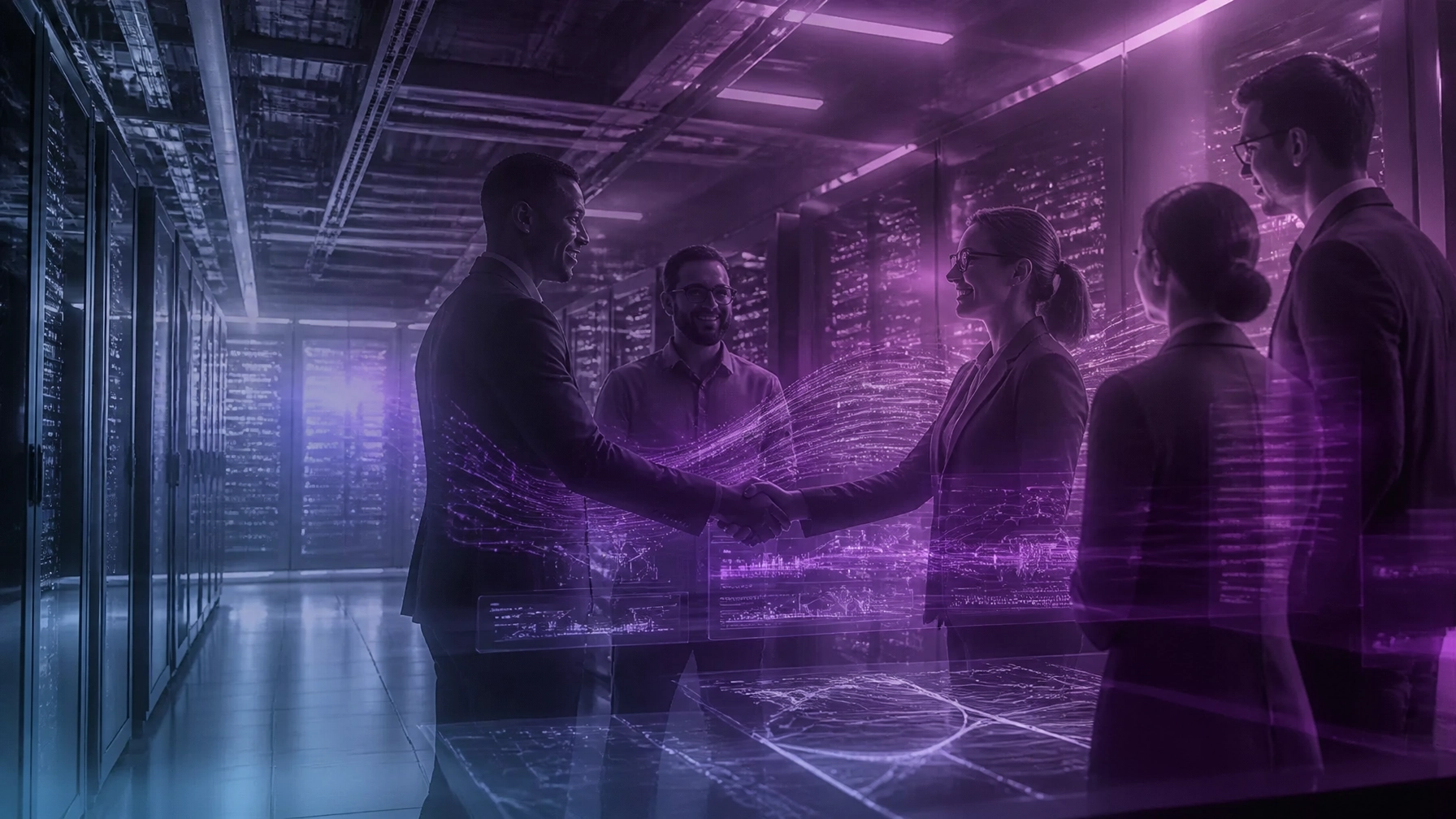
Data Center Migrations: Why People, Not Hardware, Are Your Biggest Risk
I must admit that I enjoy every busy, varied, and unpredictable day in the world of IT consulting. There is something truly exhilarating about the high-stakes environment of a major infrastructure shift. But if I’m being honest, and I always try to be, I get emails about everything, and the one topic that consistently keeps C-suite executives up at night isn’t the failure of a server or a corrupted database. It’s the people.
Whenever we talk about a data center migration, the conversation usually starts with hardware. We talk about “lift and shift,” “cloud-first,” and “latency issues.” We obsess over the specs of the new cooling systems or the bandwidth of the fiber optic cables. But in my little world at Lurdez Consulting Group, we’ve learned that the hardware is the easy part. Cables don’t have egos. Servers don’t get tired at 3:00 AM during a cutover window. And storage arrays don’t misinterpret a Slack message.
People, however? We are a different story.
I reserve most of my day for talking to team leads and stakeholders because I know that a data center migration consultant is really a professional mediator, a master communicator, and a psychological architect. Do you have what it takes to navigate the messy, human side of a migration? Or are you just hoping the hardware will save you? (Spoiler alert: It won’t.)
The Digital Transformation Reality Check
Let’s have a reality check. We live in an era of constant digital transformation. Organizations are moving to the edge, the cloud, or hybrid environments at a breakneck pace. But here is the sunny-side-up truth: most data center migrations don’t fail because the technology was too complex. They fail because the communication was too thin.
When you’re moving a data center, you aren’t just moving boxes; you are moving the nervous system of an entire company. This should go without saying, but truthfully, many leaders forget that every application sitting on those servers has a “human owner” who is terrified of downtime.
The biggest risk in any migration is what I like to call “The Silo Effect.” You have the network team in one corner, the application owners in another, and the storage guys in the basement (metaphorically speaking, of course). Without a cohesive human strategy, these teams operate like disparate instruments in an orchestra without a conductor. The result isn’t a migration; it’s a cacophony of unplanned downtime and finger-pointing.
In a nutshell, the technology is predictable. The people are where the “wishy-washy” variables live. If your data center migration consultant isn’t spending more time on team alignment than on server rack diagrams, you might be heading for a “parking lot” of failed deadlines.
T.E.A.M. Methodology: The Secret Decoder
At Lurdez Consulting Group, we don’t just walk in and start unplugging things. We use our proprietary T.E.A.M. methodology to ensure that the human element is not just managed, but optimized. This isn’t just some corporate jargon, it’s the secret decoder for increasing relational excellence, as outlined in our book, “T.E.A.M.: The IT Project Manager’s Secret Decoder for Increasing Relational Excellence.”

Here is how we apply the T.E.A.M. traits, Tenacious, Equable, Analytical, and Magnetic, to a high-stakes data center migration:
1. Tenacious
Migrations are long, exhausting, and filled with unexpected hurdles. You need a team that is tenacious enough to see the project through to the finish line, even when the 48-hour cutover window feels like it’s been 48 years. This is about persistence and the refusal to let a “minor” setback derail the entire schedule.
2. Equable
This is perhaps the most critical trait during a cutover. When a critical database doesn’t mount at 2:00 AM, you don’t need a hero who screams; you need an equable leader who remains calm under pressure. An equable team keeps their heads when everyone else is losing theirs, ensuring that decisions are made based on logic, not panic.
3. Analytical
While we focus on people, we never ignore the data. The analytical side of our methodology ensures that every dependency is mapped and every risk is quantified. We look at the “why” behind the move and use deep data analysis to predict where the human errors are most likely to occur.
4. Magnetic
A successful migration requires buy-in from the entire organization. You need leaders who are magnetic, people who can attract others to the vision, build trust across departments, and ensure that everyone feels like they are part of the win. Magnetic leaders break down silos and get the “Relational Excellence” engine humming.
Practical Integration Tips
So, how do you actually integrate these human-centric concepts into a project that feels very… well, un-human? It’s all about bridging the gap between the technical requirements and the social dynamics of your organization.
- The Human Inventory: Before you audit your servers, audit your stakeholders. Who are the people most impacted by this move? What are their fears? Where do they excel? Knowing who is “Analytical” vs. who is “Magnetic” on your team allows you to assign roles that actually fit their personalities.
- The Communication “War Room”: Don’t just set up a technical bridge. Establish a communication protocol that acknowledges the stress levels of the team. We recommend frequent “micro-check-ins” to maintain situational awareness.
- The “No-Blame” Culture: Human error is inevitable. In a high-stakes migration, someone will misconfigure a port or forget to check a backup. The key is to have a culture where that person feels safe reporting it immediately. The faster a mistake is reported, the faster it can be fixed before it cascades into a disaster.
- Relational Training: Remember that time, experience, and education can always help. We often suggest that our clients take the personality assessment to understand how their team will react under the specific pressures of a migration.
The Leadership Mindset
Leadership isn’t about knowing where every cable goes; it’s about knowing where every person’s head is. Where do you excel as a leader? Are you providing the air cover your technical teams need to do their jobs?

In our experience, the most successful data center migrations are led by people who understand that their primary job is Relational Excellence. They move from “managing a project” to “leading a transformation.” This mindset shift involves:
- Managing Expectations: Being transparent with the C-suite about risks.
- Empowering the Experts: Letting the technical teams lead the “Analytical” work while the PMO handles the “Tenacious” follow-through.
- Celebrating Small Wins: Migration projects can be a slog. Recognizing the completion of a “wave” or a successful rehearsal builds the momentum needed for the big day.
I have some people in my life who think IT is just about code and hardware, but they couldn’t be more wrong. It’s about trust. If your stakeholders don’t trust your IT program management team, they will sabotage the migration through “shadow IT” or by withholding critical information.
Building Your Adaptive PMO
In today’s world, a static Project Management Office (PMO) is a dinosaur. You need an Adaptive PMO: one that can pivot as quickly as your technology does. An adaptive PMO doesn’t just follow a checklist; it senses the environment.
When Lurdez Consulting Group acts as your data center migration consultant, we build an adaptive structure that supports both the technology and the people. We integrate Agile flexibility with Waterfall structure (a hybrid approach) to ensure that we are ready for the “unpredictable” days that I enjoy so much.
Building an adaptive PMO means investing in tools that enhance human capability, not replace it. It’s about creating a “well-oiled machine” that can handle the grit and friction of a major move without overheating.
8 AI-Augmented PMO Services
Speaking of enhancing human capability, we are seeing a massive shift in how AI is supporting the PMO. AI isn’t here to take our jobs; it’s here to give us our time back so we can focus on those critical human relationships.

Here are 8 ways AI is currently augmenting the PMO during complex migrations:
- Predictive Risk Modeling: AI can analyze past migration data to predict which “waves” are most likely to face human-driven delays.
- Automated Dependency Mapping: Reducing the “Analytical” burden by scanning environments to find the hidden links between apps and hardware.
- Sentiment Analysis in Communication: Checking the tone of team communications to identify burnout or mounting frustration before it leads to errors.
- Resource Optimization: AI can suggest the best team rotations for overnight cutovers to minimize fatigue and maximize the “Equable” state of the group.
- Smart Documentation: Automatically updating runbooks as changes are made, ensuring a “single source of truth” for all stakeholders.
- Real-time Anomaly Detection: AI monitors the environment during the move to alert the team to technical issues before they become business outages.
- Automated Status Reporting: Freeing up the PM to spend more time in “Magnetic” leadership roles rather than trapped in Excel spreadsheets.
- Post-Migration Analysis: Quickly synthesizing “Lessons Learned” from thousands of data points to improve the next migration wave.
What’s Next
Data center migrations are, and will always be, a high-wire act. But by focusing on your people: through the lens of Tenacious, Equable, Analytical, and Magnetic traits: you turn that wire into a bridge.
If you’re feeling overwhelmed by an upcoming move, remember: you don’t have to do it alone. Whether you need a full-scale IT engineering team or a specialized migration consultant, we are here to help you navigate the complexity.
Next week, we’ll be diving into the world of Cybersecurity in the Age of Hybrid Work. How do you keep your “well-oiled machine” safe when the parts are scattered all over the globe? Stay tuned!
TGIF (or whatever day you happen to be reading this)! Let’s keep moving forward together.
: Penny
Focus Key Phrase: data center migration consultant
Tags: Data Center Migration, IT Project Management, Human Factors, T.E.A.M. Methodology, IT Consulting, Migration Risk, Team Building
SEO Title: Data Center Migrations: People, Not Hardware, Are Your Biggest Risk
Meta Description: Discover why human coordination, not hardware, is the secret to a successful data center migration. Learn how the T.E.A.M. methodology ensures project success.
Category: Blog