
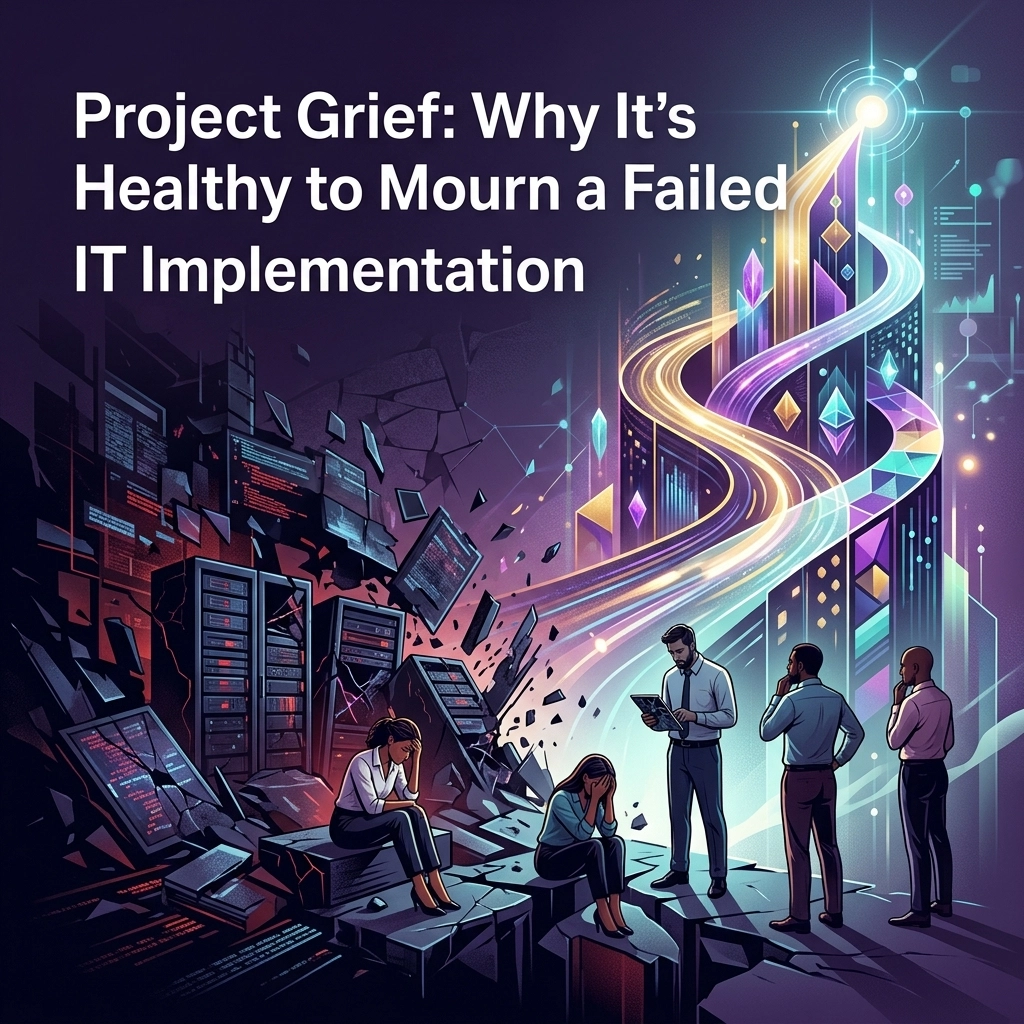
Project Grief: Why It’s Healthy to Mourn a Failed IT Implementation
I’ve been in the IT consulting world for a long time, and if there’s one thing I’ve learned, it’s that we don’t talk enough about the “feels.” We talk about KPIs, we talk about sprint velocities, and we definitely talk about ROI. But what happens when a project: one you’ve poured your heart, soul, and countless late-night caffeine sessions into: simply doesn’t make it?
It’s a tough pill to swallow. I’ve seen teams walk away from a failed implementation looking like they’ve just lost a close friend. And honestly? In a way, they have. They’ve lost a vision, a goal, and a massive chunk of their lives.
In my little world here at Lurdez Consulting Group, I’ve realized that ignoring this emotional fallout is a recipe for burnout. We need to talk about “Project Grief.” It sounds heavy, I know, but acknowledging that it’s okay to mourn a failed IT implementation is actually the healthiest thing a team can do. It’s the secret sauce to building the kind of resilience that makes the next project a smashing success.
The Digital Transformation Reality Check
Let’s get real for a second. Digital transformation is hard. We’re often told that if we just have the right tech and the right budget, everything will be “sunny side up.” But the reality check is that according to industry standards, a staggering number of IT projects fail to meet their original goals.
When a project is decommissioned or a rollout is halted, the immediate corporate reaction is usually to “pivot” or “fail fast.” While I’m all for agility, the “fail fast” mentality often skips a crucial step: the human element.

When we ignore the emotional side of project failure, we leave our teams in a state of “parking lot” emotions: stuff that’s just sitting there, taking up space and creating mental clutter. I’ve seen brilliant engineers become cynical or “wishy washy” about new initiatives because they never truly processed the loss of the last one.
The research is clear: loss is an overlooked part of change. Whether it’s a data center migration that hit a wall or a new CRM that the staff refused to adopt, the team experiences the Kübler-Ross stages of grief. They deny the failure, they get angry at the “C-suite,” they try to bargain for more time, they feel the weight of the “depression” phase, and eventually: if they’re allowed to: they reach acceptance.
T.E.A.M. Methodology: Navigating the Storm
At Lurdez Consulting Group, we lean heavily on our T.E.A.M. methodology to navigate these choppy waters. This isn’t just about managing tasks; it’s about managing people through the highs and the very low lows.
- Tenacious: When a project fails, being tenacious doesn’t mean blindly pushing forward with a dead idea. It means being tenacious about the team’s well-being. It’s about sticking with your people even when the “Project Pulse” is flatlining. It takes grit to look at a failure and say, “We’re going to figure out why this happened, and we’re going to do it together.”
- Equable: This is critical during a project “funeral.” Emotions run high. People are looking for someone to blame. An equable leader stays level-headed. They provide a safe space where team members can express frustration without fear of professional suicide. It’s about maintaining a calm, steady hand on the tiller while the team vents.
- Analytical: This is where we look at the “why” without the “who.” We analyze the data, the workflows, and the technical hurdles. By turning the failure into a data point, we help the team detach their personal self-worth from the project’s outcome.
- Magnetic: A magnetic leader pulls the team back together. They remind everyone of the bigger mission. They use their relational excellence to mend the fractures that failure often causes.

Practical Integration Tips for “Project Funerals”
So, how do we actually “mourn” a project? It’s not about wearing black to the office (unless that’s your vibe), but it is about intentionality. Here are some practical ways to integrate this into your IT program and project management flow:
- Host a Post-Mortem with Heart: Most post-mortems are dry, technical audits. Try adding a “Human Element” section. Ask the team: “What was the hardest part of letting this go?” or “What are you most proud of, despite the outcome?”
- Acknowledge the Sunk Cost (Emotionally): We talk about sunk cost in budgets, but what about sunk effort? Acknowledge the late nights and the missed family dinners. Validating that effort makes people feel seen.
- The “Lessons Learned” Celebration: It sounds counterintuitive, but celebrate what you did learn. Maybe the cybersecurity protocols you developed are gold, even if the main app failed.
- Clear the Deck: Don’t jump into a new project the very next morning. Give the team a “buffer day” to reset.
The Leadership Mindset
I must admit, I enjoy every busy, varied, and unpredictable day in this industry, but I reserve most of my respect for leaders who aren’t afraid to be vulnerable. As the CEO of Lurdez Consulting Group, I’ve had to lead through projects that didn’t go as planned.
The leadership mindset required here is one of mentorship. You aren’t just a manager; you’re a steward of your team’s professional spirit. This should go without saying, but truthfully, many leaders are so focused on the next “win” that they leave a trail of burnt-out employees behind them.

Remember that time, experience, and education can always help you improve your technical stack, but your team’s trust is much harder to rebuild once it’s shattered by a cold, corporate response to failure. If you want a stellar team, you have to treat them like humans, not just resources on a Gantt chart.
Building Your Adaptive PMO
In an era of rapid change, your Project Management Office (PMO) needs to be adaptive. An adaptive PMO recognizes that failure is a part of innovation. If you never fail, you’re probably not pushing hard enough.
By allowing for “project grief,” you’re actually building a more resilient network infrastructure of people. They become more willing to take risks because they know that if things go south, they won’t be discarded. They’ll be supported, they’ll learn, and they’ll grow. This is what we strive for in our IT engineering services.
8 AI-Augmented PMO Services to Soften the Blow
While we focus on the human side, we also use modern tools to mitigate the risks of failure before they become catastrophic. AI can help us spot the “grief” triggers early. Here’s how we leverage AI-augmented services at Lurdez:
- Predictive Risk Modeling: Spotting the technical “red flags” before they become “project enders.”
- Sentiment Analysis: Monitoring team communication to gauge morale and catch burnout before it starts.
- Automated Documentation: Reducing the “grunt work” so that if a project is scrapped, the loss of time feels less personal.
- Resource Optimization: Ensuring no one is “carrying the world” on their shoulders.
- Scenario Planning: Having a Plan B, C, and D ready to go, which reduces the shock of a Plan A failure.
- Real-time Post-Mortem Data: Collecting insights as they happen, rather than trying to remember them through the fog of failure.
- Skill-Gap Analysis: Identifying if a project is failing because the team lacks a specific tool or training.
- Knowledge Transfer Automation: Ensuring that even if a project dies, the intelligence gathered lives on in the organization.

What’s Next
Processing the “death” of a project is just one piece of the human element puzzle. It’s about building a culture where people feel safe to be their authentic selves: whether they are celebrating a massive win or mourning a tough loss.
In our next post, we’re going to dive into the “Magnetic” side of our T.E.A.M. methodology: “The Power of Relational Excellence: Why Soft Skills are the New Hard Skills in IT.” We’ll talk about how to build those connections that keep a team together through the toughest migrations and the most complex data center transformations.
If you’re feeling the weight of a recent project setback, or if you just want to talk about how to make your team more resilient, reach out to us. I’d love to hear your story. After all, we’re all in this together.