
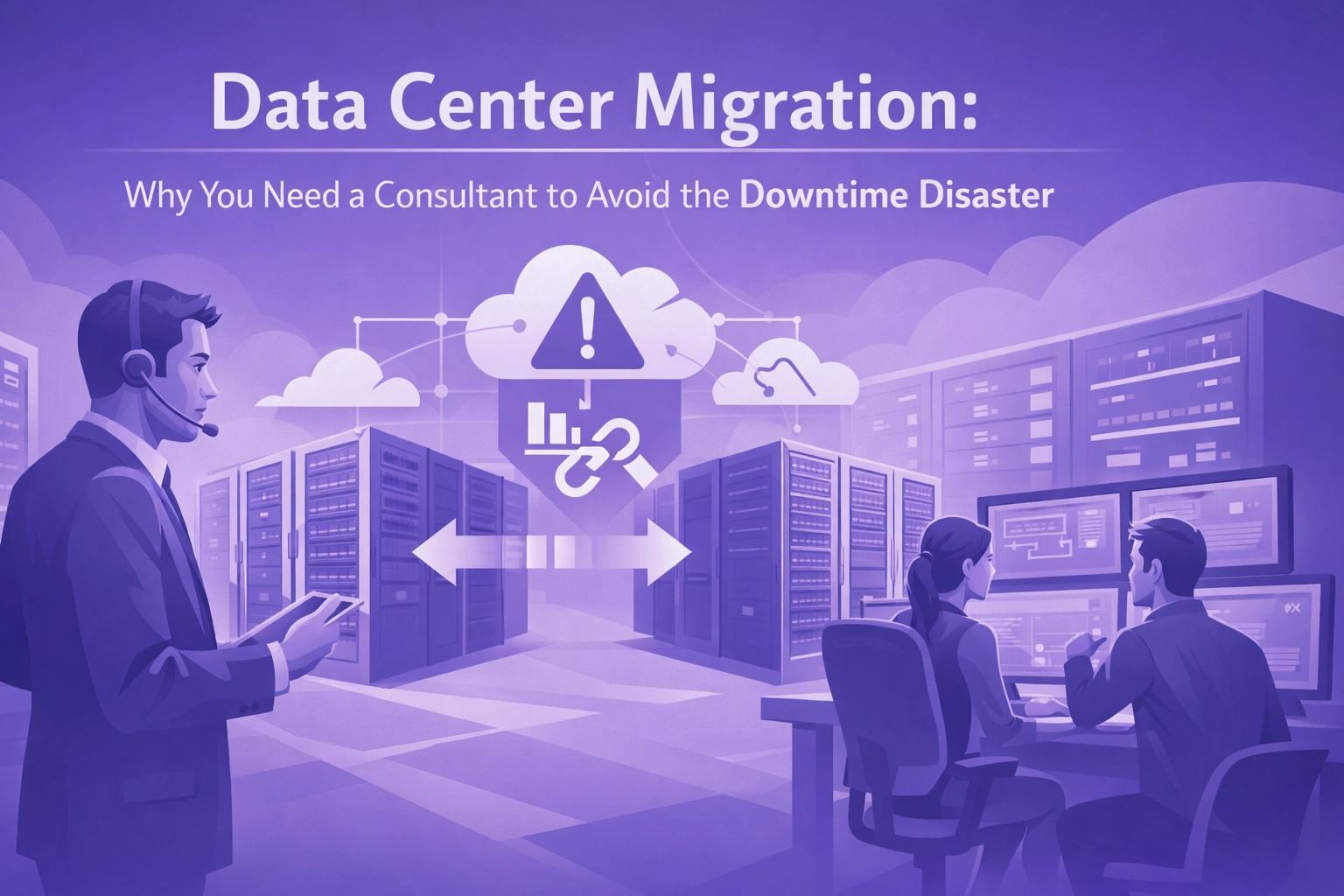
Data Center Migration: Why You Need a Consultant to Avoid the Downtime Disaster
Let me tell you something I’ve seen more times than I’d like to admit: a company decides it’s time to migrate their data center. The IT director assures the C-suite it’ll be “smooth sailing.” Fast forward three months, and they’re dealing with 48 hours of unplanned downtime, angry customers, and a six-figure revenue loss. Sound familiar?
Data center migrations are one of those projects that look deceptively simple on paper. You’re just moving stuff from Point A to Point B, right? Wrong. Dead wrong. These migrations are complex, high-stakes operations where a single miscalculation can bring your entire business to its knees. And here’s the kicker: more than 90% of enterprises overspend on their cloud migrations, usually because they didn’t have the right expertise guiding the ship.
This is exactly why you need a data center migration consultant in your corner. Not because your internal team isn’t capable, but because migrations require a specific blend of technical expertise, strategic planning, and: here’s where we’re different: a people-first approach that keeps everyone aligned and informed throughout the chaos.
The Real Risks Nobody Talks About
When I work with clients on data center migrations, I always start by asking: “What keeps you up at night about this move?” The answers are usually the obvious ones: downtime, data loss, security breaches. But the real risks? Those are the ones lurking beneath the surface.

Dependency blindness is a big one. Your systems are interconnected in ways that even your most experienced engineer might not fully understand. That legacy application from 2015? It’s talking to three other systems that depend on it, and nobody documented those relationships. Move it without understanding those dependencies, and you’ve just created a domino effect of failures.
Then there’s the security and compliance minefield. During migration, your data is vulnerable. If you’re in healthcare, finance, or any regulated industry, you’re not just risking downtime: you’re risking massive compliance violations and the penalties that come with them. One healthcare client I worked with nearly exposed protected health information during their migration because they didn’t account for encryption protocols during the transfer phase.
And let’s talk about cost overruns. Without proper planning, migrations bleed money. You’ve got extended timelines, emergency troubleshooting, duplicate infrastructure running in parallel, and consultant fees to fix what went wrong. I’ve seen migrations that were budgeted for $200,000 end up costing three times that because nobody mapped out the full scope upfront.
Why DIY Migrations Usually End in Disaster
Look, I get it. Your IT team is smart. They’ve been managing your infrastructure for years. So why can’t they handle the migration themselves?
The honest answer? They probably could: if they had unlimited time, unlimited budget, and zero other responsibilities. But that’s not reality. Your team is already juggling daily operations, security patches, help desk tickets, and a dozen other priorities. A data center migration isn’t something you can tackle in your spare time between meetings.
Here’s what I see happen with DIY migrations: the planning phase gets rushed because everyone’s too busy. Testing happens in production (yikes) because there’s no time to build proper dev environments. Documentation is an afterthought. And when something goes wrong: and something always goes wrong: there’s no one with migration-specific expertise to troubleshoot quickly.

The biggest issue? Lack of structure and discipline. Migrations need rigor. They need detailed timelines, resource allocation, risk assessments, and contingency plans. They need someone whose full-time job is making sure nothing falls through the cracks. When your team is trying to migrate a data center while also keeping the lights on, that discipline goes out the window.
What a Data Center Migration Consultant Actually Does
So what makes working with a consultant different? It’s not magic: it’s methodology, experience, and dedicated focus.
At Lurdez Consulting Group, we approach every migration with what I call “militant preparation.” Before we move a single server, we’re conducting comprehensive planning sessions that map out every system, every dependency, every risk factor, and every stakeholder concern.
Discovery and assessment comes first. We dig deep: and I mean deep: into your current environment. We document everything: applications, databases, network configurations, integrations, security protocols, compliance requirements. We identify the workloads that can tolerate downtime and the mission-critical systems that absolutely cannot go offline. This isn’t glamorous work, but it’s what prevents disasters.
Next comes strategic planning. We build a migration roadmap that aligns with your business objectives and risk tolerance. Maybe you need a phased approach that moves non-critical systems first. Maybe you need a “lift and shift” to meet a lease deadline. Maybe you’re looking at a hybrid model. We match the strategy to your specific situation: not some cookie-cutter playbook.
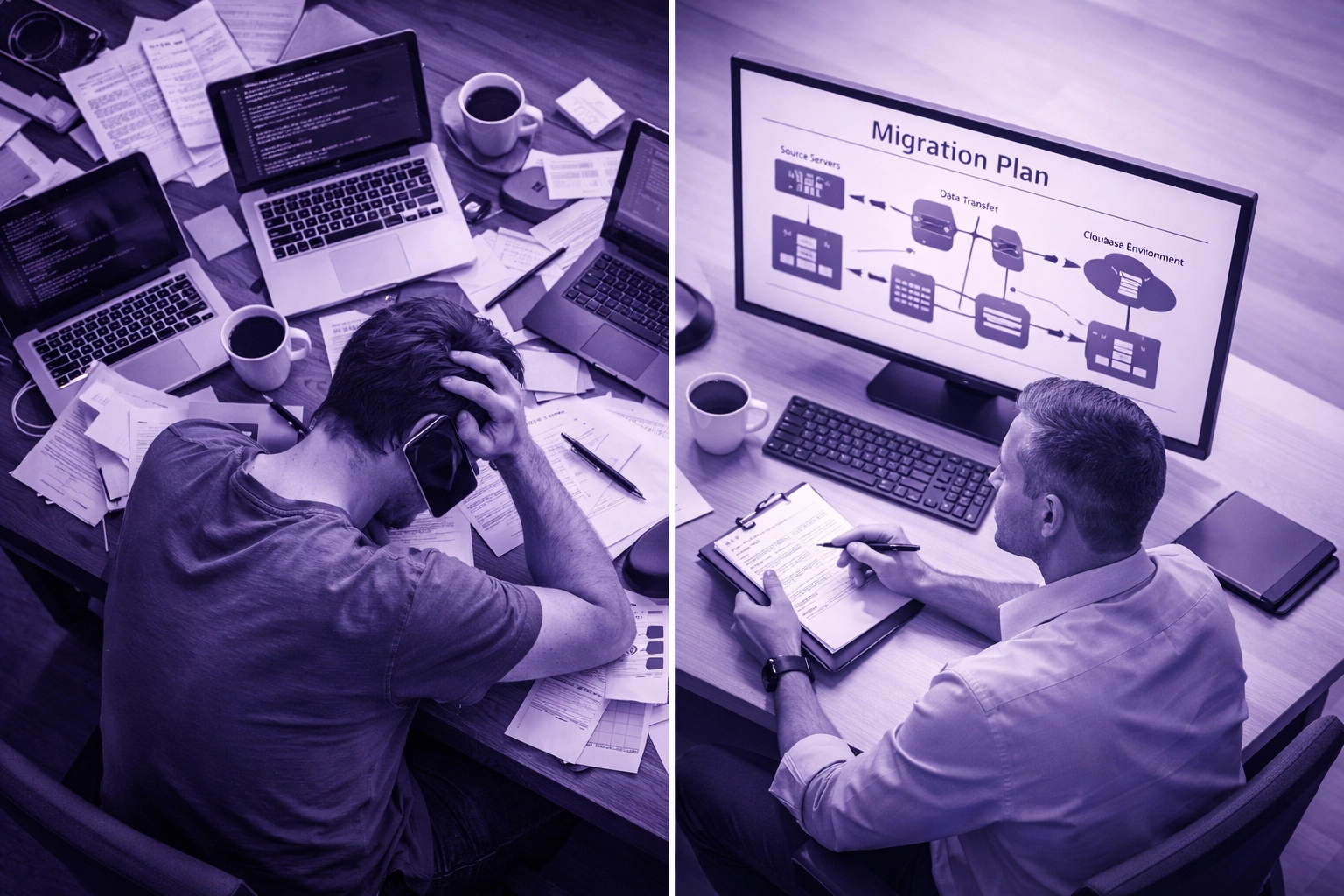
Then we move into rigorous testing. This is where we separate the professionals from the amateurs. We build out lab and development environments where we can test the migration process without touching production. We validate that migrated applications work correctly. We conduct security reviews. We identify issues and fix them before they impact your business. By the time we’re ready for the actual migration, we’ve already done it successfully in a controlled environment.
Execution discipline is where the rubber meets the road. We execute the migration plan with the kind of precision you’d expect from a surgical team. We work during your specified maintenance windows. We monitor every step. We have rollback procedures ready if something goes sideways. And we communicate constantly with your team so everyone knows exactly what’s happening.
The People-First Difference
Here’s where Lurdez Consulting Group really stands apart: we don’t just manage technology: we manage people and relationships. Because here’s a truth that too many consultants ignore: technical excellence means nothing if your team is confused, your stakeholders are anxious, and your end users are caught off-guard.
I’ve built my approach around what I call Relational Excellence: the understanding that successful IT projects depend as much on human dynamics as technical execution. During a data center migration, this means:
Clear, consistent communication with every stakeholder level. Your C-suite needs high-level updates about risk and business impact. Your IT team needs technical details and hands-on collaboration. Your end users need to know what to expect and when. We tailor our communication style and content for each audience because one-size-fits-all updates don’t cut it.
Change management that actually works. Migrations disrupt workflows. People need time to adapt. We build in training sessions, documentation, and support structures so your team isn’t left floundering in a new environment. We transfer knowledge throughout the process so your internal team can maintain and optimize the new infrastructure long after we’re gone.
Stakeholder alignment from day one. I make sure everyone agrees on success criteria, timelines, and acceptable trade-offs before we start. No surprises. No mismatched expectations. Just clear, documented consensus that keeps everyone rowing in the same direction when challenges arise.
Minimizing Downtime and Business Disruption
Let’s get to the heart of why you’re reading this: you want to avoid downtime. You need your business to keep running while you make this massive infrastructure change.
A structured, consultant-led approach creates what I call a “surgical strike” migration: quick, precise, and minimally invasive to your daily operations. We schedule migrations during your low-traffic periods. We sequence workloads strategically so critical systems have redundancy during the transition. We build in buffer time for unexpected issues so we’re never rushing to bring systems back online before your business opens.
The testing I mentioned earlier? That’s your insurance policy against downtime. By the time we migrate your production environment, we’ve already validated that everything works. We’ve identified and resolved compatibility issues. We’ve optimized performance. The production migration becomes a well-rehearsed performance rather than a high-wire act without a net.
And if something does go wrong: because despite all the planning, technology sometimes has other ideas: we have rollback procedures ready to go. We’re not figuring it out on the fly. We’re executing Plan B with the same discipline we brought to Plan A.
Post-Migration Support and Knowledge Transfer
Here’s something that separates good consultants from great ones: we don’t disappear the moment the migration is complete. The days and weeks following a migration are critical for stability and optimization.
We provide post-deployment support to handle any issues that emerge once real users start hitting real workloads in the new environment. We monitor performance metrics. We fine-tune configurations. We’re available to troubleshoot because we know your environment intimately: we just built it.
But more importantly, we ensure your team can take the reins confidently. Throughout the project, we’re conducting knowledge transfer sessions, documenting procedures, and training your staff on the new infrastructure. The goal isn’t to make you dependent on us: it’s to make you self-sufficient in your new environment.
Making the Investment Decision
I won’t sugarcoat it: hiring a data center migration consultant is an investment. But let’s talk about what you’re really investing in.
You’re buying risk mitigation. You’re buying expertise that would take years for your internal team to develop through trial and error: errors that cost real money and create real business disruption. You’re buying dedicated focus so your team can keep your business running instead of being pulled away for months-long migration work.
Most importantly, you’re buying peace of mind. You’re buying the ability to sleep at night knowing that professionals with dozens of successful migrations under their belts are handling one of the most complex and risky projects your IT infrastructure will face.
Ready to Migrate Without the Migraine?
Data center migrations don’t have to be disasters waiting to happen. With the right expertise, the right methodology, and a people-first approach that keeps everyone aligned, you can execute a smooth transition that minimizes downtime and positions your infrastructure for future success.
At Lurdez Consulting Group, we’ve guided countless organizations through successful data center migrations using our structured, relationship-focused approach. We combine technical excellence with the kind of communication and stakeholder management that keeps projects on track even when challenges arise.
If you’re facing a data center migration and want to avoid joining the statistics of failed DIY attempts, let’s talk. We’ll assess your specific situation, map out a realistic strategy, and show you exactly how we’ll keep your business running throughout the transition.
Because downtime disasters aren’t inevitable: they’re preventable. You just need the right consultant in your corner.