
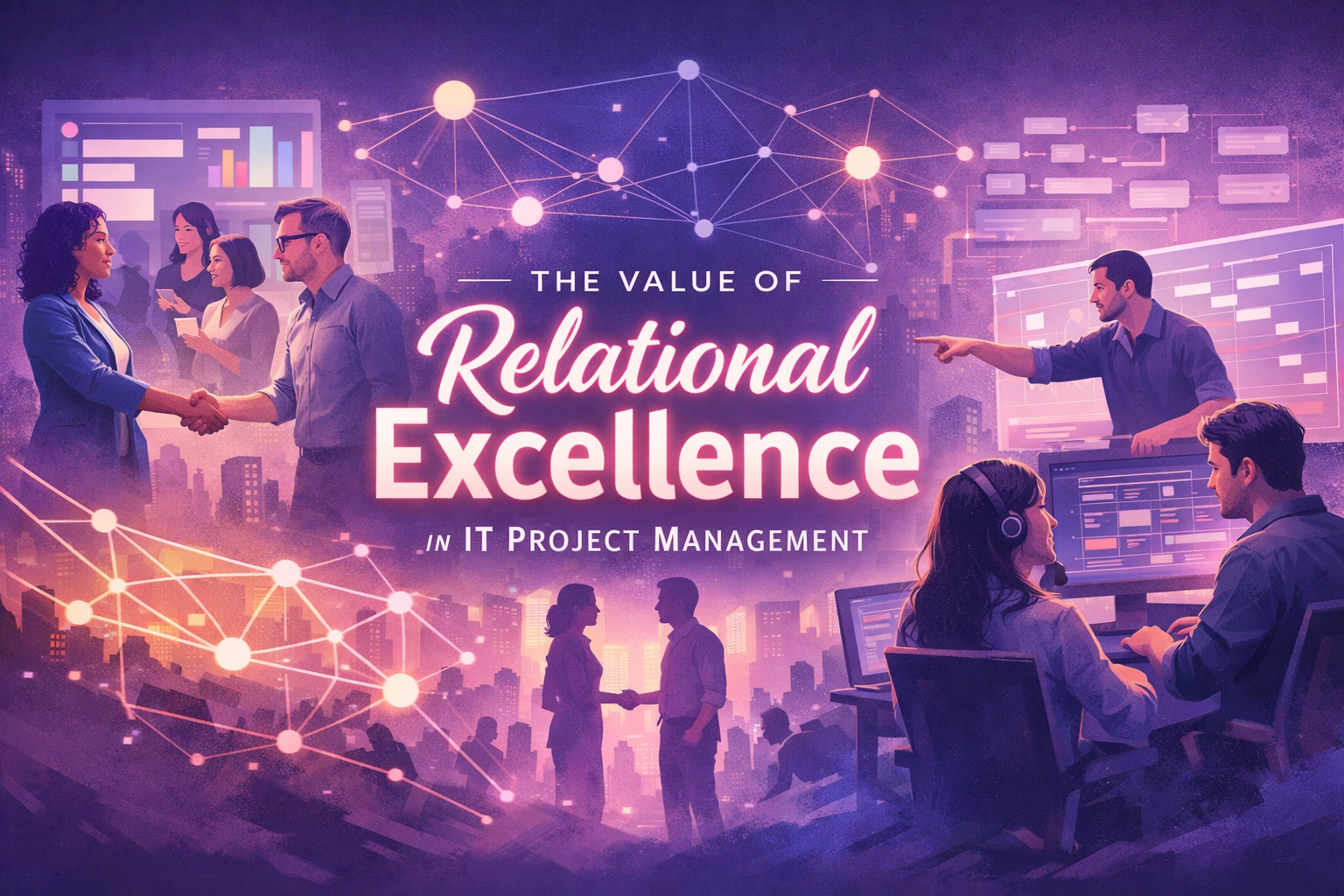
The Value of Relational Excellence in IT Project Management
I’ll be honest: when I first started consulting in IT project management, I thought my technical chops and flawless Gantt charts were the secret to success. Hit the milestones, deliver on budget, and everyone’s happy, right?
Wrong.
It didn’t take long to realize that the projects that truly succeeded: the ones where teams stayed engaged, stakeholders trusted the process, and clients came back for more: had nothing to do with my task lists. They had everything to do with how I showed up in the room and whether people felt heard, valued, and connected to the mission.
That’s relational excellence. And in my little world of IT consulting, it’s the difference between a one-time project and a long-term partnership.
What Relational Excellence Actually Means
Let me clarify something upfront: relational excellence is not about being “nice” or avoiding tough conversations. It’s not about making everyone feel warm and fuzzy while the project burns. It’s about building trust-based relationships that make hard work easier and high performance sustainable.
Traditional project management focuses on outputs: did we hit the deadline? Did we stay within budget? Did we check all the boxes? Those things matter, but they’re not the whole picture. Relational excellence shifts the lens to outcomes: Are our clients satisfied? Do team members feel inspired and supported? Are we building something that lasts beyond this single engagement?

When you prioritize relationships alongside deliverables, you create an environment where people want to do their best work. They’re not just punching the clock: they’re invested in the mission because they trust the leadership and believe in the vision.
Why IT Projects Fail Without Relational Excellence
Here’s the uncomfortable truth: most IT projects fail not because of bad technology, but because of broken communication and fractured relationships.
I’ve walked into more than a few IT project disasters where the team had the right tools, the right budget, and the right timeline: but zero trust. Developers didn’t trust the PM. The PM didn’t trust the client. The client didn’t trust anyone. And guess what? The project imploded.
When relationships are weak or nonexistent, everything takes longer. Miscommunication becomes the norm. People protect their turf instead of collaborating. Finger-pointing replaces problem-solving. The project might technically “finish,” but it leaves a trail of frustration, burnout, and a client who will never call you again.
On the flip side, when you build strong, authentic relationships from day one, magic happens. Stakeholders feel comfortable sharing concerns early. Team members speak up when something’s off track. Clients trust your recommendations even when the path forward isn’t crystal clear. That trust creates momentum: and momentum creates results.
The Four Pillars of Relational Excellence in IT Projects
At Lurdez Consulting Group, we’ve built our entire approach around what we call the T.E.A.M. methodology: Tenacious, Equable, Analytical, and Magnetic. These four traits define not just how we manage projects, but how we build relationships that sustain long-term success.

1. Communication That Goes Beyond Status Updates
Relational excellence requires dedicated, intentional communication. I’m not talking about firing off a weekly status email and calling it a day. I’m talking about understanding your client’s business needs at a deep level and translating that into every decision you make.
This means asking better questions. It means listening without immediately jumping to solutions. It means acknowledging when you don’t have all the answers and being willing to figure it out together. When clients feel genuinely heard: not just tolerated: they become partners instead of adversaries.
2. Trust and Accountability as Non-Negotiables
You can’t fake trust. It’s earned through consistent action, transparency, and follow-through. When I tell a client or team member I’m going to do something, I do it. If I can’t, I communicate that before the deadline, not after.
Building a climate of trust also means leading by example. If you want your team to be accountable, you need to model that behavior first. If you want open communication, you need to be the first one to admit when you’ve made a mistake. Authenticity isn’t a buzzword: it’s the foundation of every high-performing team I’ve ever worked with.
3. Long-Term Value Over Short-Term Wins
Here’s a metric that matters more than any KPI: repeat business. If a client comes back to you for the next project, you’ve done something right. If they refer you to their network, you’ve done something exceptional.
Relational excellence is a long game. It’s about building partnerships that extend beyond a single contract. When you invest in relationships: when you genuinely care about the client’s success and not just your billable hours: you create opportunities that compound over time.

I’ve had clients reach out years after our initial engagement because they remembered how we handled a crisis or how we made them feel during a stressful migration. That’s the power of relational excellence: it sticks with people.
4. Continuous Improvement Through Honest Feedback
One of the most underrated aspects of relational excellence is the willingness to ask for: and actually listen to: feedback. After every major project milestone, I make it a point to check in with the team and the client. What’s working? What’s not? What could we do better?
This isn’t a formality. It’s a genuine opportunity to strengthen relationships and improve future outcomes. When people see that their input leads to real change, they trust the process more. They engage more. They contribute more.
The Competitive Advantage You Can’t Outsource
Let me be blunt: your competitors have access to the same project management software you do. They can hire developers just as talented. They can pitch similar timelines and budgets.
What they can’t replicate is the strength of your relationships. They can’t duplicate the trust you’ve built with your clients or the loyalty you’ve earned from your team. That’s your competitive advantage: and it’s built one authentic interaction at a time.
In my experience, the most successful IT projects aren’t just technically sound: they’re relationally sound. The teams that deliver exceptional results are the ones where people genuinely respect and support each other. The clients who become long-term partners are the ones who feel like they’re working with you, not just hiring you.

How Relational Excellence Shows Up in Real IT Projects
Let me give you a real-world example. A few years ago, we were managing a data center migration for a healthcare client. The technical complexity was significant, but the relational complexity was even greater. We had stakeholders across multiple departments, each with competing priorities and varying levels of technical literacy.
Instead of bulldozing through with a rigid plan, we invested time upfront building relationships. We held listening sessions with every department. We acknowledged their concerns, even when they seemed tangential to the technical work. We created communication channels that fit their needs, not ours.
When the inevitable hiccups happened during the migration: and they always do: we had the relational equity to navigate them without panic. People trusted us. They knew we had their back. The project finished on time, and more importantly, the client felt supported throughout the entire journey. They’ve since brought us in for three additional projects.
That’s the ROI of relational excellence.
The Bottom Line
If you want to build a sustainable IT consulting practice: one where clients stay loyal, team members stay engaged, and projects consistently succeed: you need to prioritize relationships as much as you prioritize deliverables.
Relational excellence isn’t a “soft skill” add-on. It’s the foundation of everything we do at Lurdez Consulting Group. It’s why our hybrid approach works. It’s why clients trust us with their most critical IT initiatives. And it’s why we’ve been able to build a practice that thrives on repeat business and referrals.
The technical work matters. The deadlines matter. The budgets matter. But none of it matters if you can’t build trust, communicate authentically, and create an environment where people want to do their best work.
That’s the value of relational excellence: and it’s something no Gantt chart can measure.
If you’re ready to bring that level of partnership to your next IT project, let’s talk. We’re here to help you succeed: not just complete a project, but build something that lasts.